Mashrabiya – Traditional Craft Inspires Sustainable Design
Culture is the unique human response to his environment in his attempt to answer both physical and spiritual needs. Hassan Fathy
Written by Sonya Ahmed, 11 May 2020
Mashrabiya in Old Cairo
As you enter the historic area of Masr al-Qadimah (Old Cairo), the hustle and bustle of downtown Cairo fades away. Here, it is calm and quiet. There is an occasional shout across the street and the banging of tools on brass, sounds of street life that you might have heard a thousand years ago. The streets are lined with centuries-old mosques and houses, providing much-needed shade.
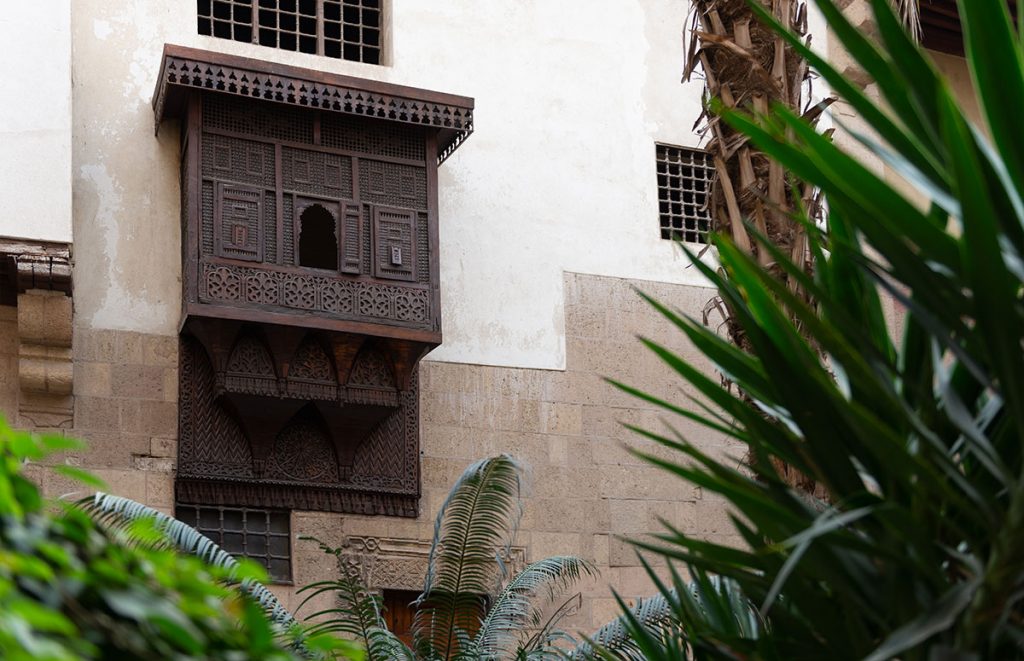
Above the street, wooden mashrabiya screens adorn many of these old buildings. Beautiful and enigmatic from the outside, the mashrabiya creates ethereal patterns on the inside, softly diffusing light and darkening an interior that would otherwise be uncomfortably bright.
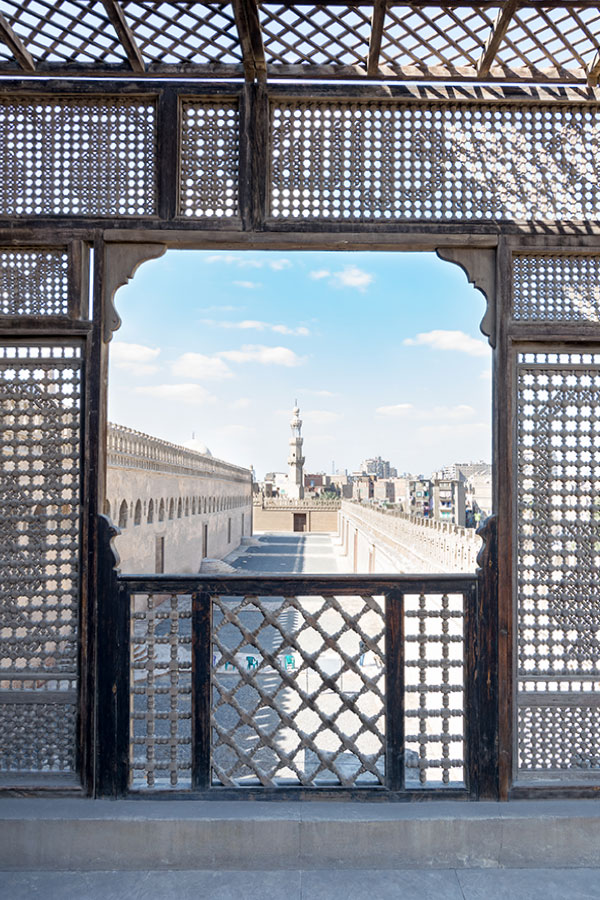
Many of the screens that exist today were made in the 18th and 19th centuries, but the earliest screens in Cairo date back to the 12th century. The mashrabiya forms part of the building facade – the exterior structure of a building – unlike blinds and curtains which sit on the inside. Thousands of small wooden pieces are placed together by hand, to create the perforated, lattice design. As well as filtering the light, they provided an additional layer of privacy in a traditional society that strictly separated public and private spheres. They spread throughout the Middle East and became more decorative, over time.
The craftsmen who created mashrabiya understood the character of their material – wood. They learned how the wood behaved in expansion and compression, as a result of temperature changes, and knew how to cut precisely, to join the wood together, without nails.
The use of mashrabiya eventually reduced, as housing styles changed. The existing screens, made of wood, were considered a fire risk, and many were demolished.
Sustainable Design and Passive Cooling
Relegated to the past as a decorative, cultural element, mashrabiya is arousing interest among contemporary designers, for its capabilities in cooling and ventilation. With increasing concern about climate change, designers are looking to traditional techniques to understand how their predecessors designed spaces that allowed them to live in harmony with nature, rather than separating themselves from it.
The modern, glass-encased skyscraper, a design that has rapidly spread across the globe, makes a bold statement about economic progress and material comfort, but has no connection with the local climate or culture. It exists only with the support of extensive air-conditioning systems, which consume huge amounts of electricity, and buffer it from its environment. Alongside the spread of shiny office buildings, the growth of mega-cities and increasing middle-class wealth, has led to a sky-rocketing desire for air-conditioning at home.
In our attempt to create the perfect indoor environment, we are contributing to the gradual destruction of our external environment. In the face of this existential threat, architects are looking to passive cooling systems as a key component of sustainable design.
Passive cooling systems are incorporated into the design of a building and harness renewable resources – sun, wind, water – to provide natural ventilation and cooling, rather than relying on electrical air-conditioning. Passive cooling systems can take many forms, from the simple placing of two windows opposite each other, to sunken indoor pools and air-cooling towers
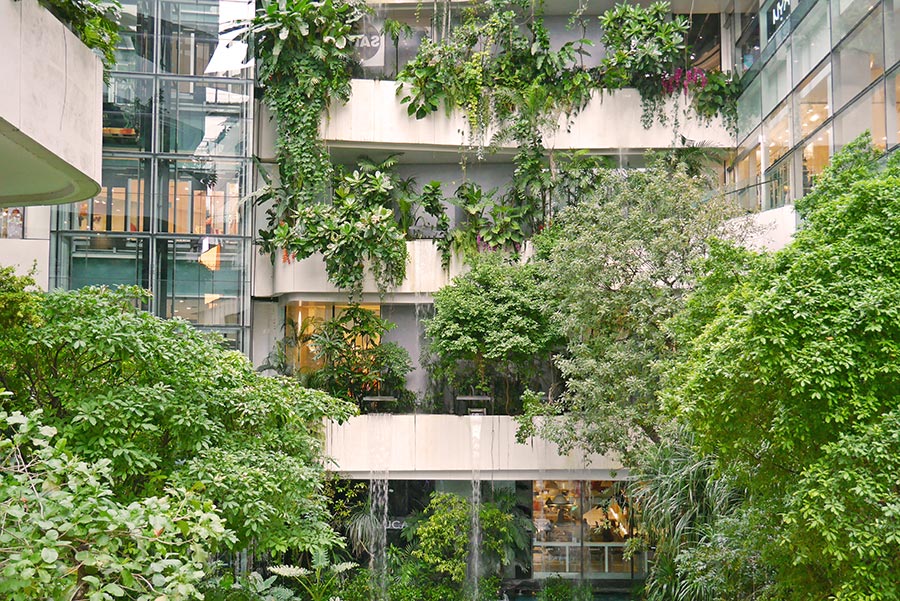
The mashrabiya screen cannot cool interiors, by itself, but contains several methods of natural ventilation and thermal buffering. Thermal buffering helps to prevent a building structure from overheating.
As air passes through the holes in the lattice screen, it compresses and heats up. When it escapes into the larger space of the room, it decompresses. As it decompresses, it cools down, so there is a constant flow of cooled air from the outside.
Another mechanism uses evaporative cooling. When moving air combines with water, the air cools down. You can feel this on a hot day when you are sweating and standing in a breeze. Large clay jars of water were placed near the mashrabiya. The constant movement of air through the screens kept the water cool, acting as a fridge, and also contributed to the movement of cool air in the room.
The wood itself can contribute to the cooling mechanism. Wood is a hygroscopic material, which means that it can absorb and release moisture from the environment. As moisture is absorbed, it increases the temperature of the wood and has a cooling impact on the air close to the panel. At night, when the air temperature is lower, the wood can release its moisture and heat.
Modern Buildings Inspired by Mashrabiya
The cooling and sun-shading aspects of mashrabiya, are inspiring architects to produce contemporary examples of this traditional technique, using different materials and combining the design with modern electronics.
In a region where temperatures can go up into the 40s, the very high-tech facade of the al-Bahr towers in Abu Dhabi, were inspired by both mashrabiya and another traditional technique – origami. When the elements are open, they resemble a contemporary mashrabiya screen, on a huge scale, and soften the impact of the sun.
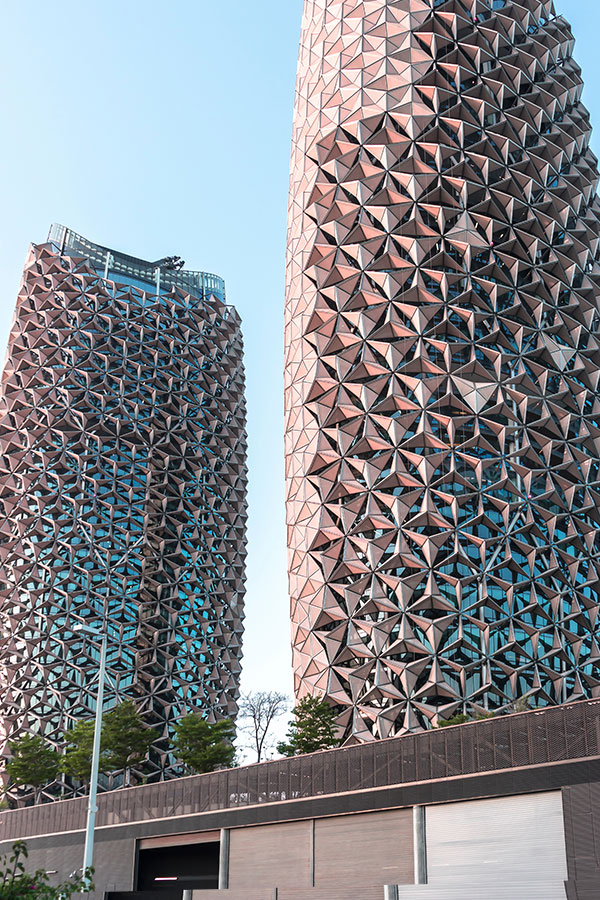
The elements open and close in response to changing, natural daylight, with the use of electronic sensors. The opening and closing technique, is derived from paper folding techniques in origami. The screen allows natural daylight to light the interiors and reduces the amount of electrical energy required to cool the building.
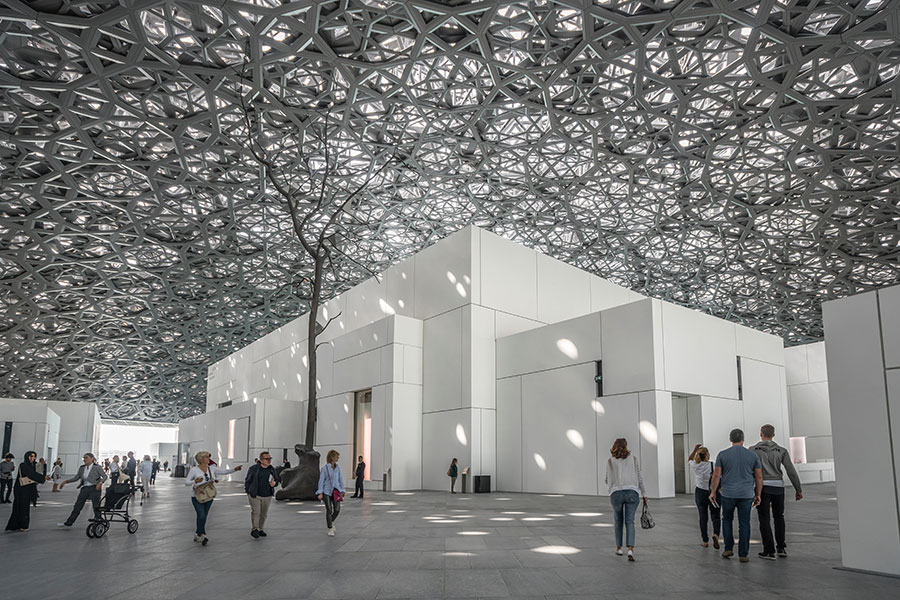
Rain of Light Dome, Louvre Abu Dhabi
The new Louvre Abu Dhabi museum uses a mashrabiya type design in the roof. Several layers of metal, with abstract patterns of perforations, allow light to pass through to the cavernous interior, creating playful patterns on the walls and the floor. As the sun moves across the sky, the shapes and patterns change, creating a dynamic design.
Inspired by the Past, to Design for the Future
It’s important to note that the architects are not espousing a romantic idea of reproducing the dwellings of the past. Our lifestyles and needs have changed. Rather, there is a desire to understand the knowledge that developed over many generations and the natural rhythm that people had with their environment.
There is an urgent need to explore this knowledge and to develop modern buildings that are adapted to the environment, can harness the resources freely available in nature, and do not require excessive amounts of non-renewable energy to compensate for poor design.
So when you walk through the streets of Old Cairo and marvel at the beauty of the mashrabiya facades that have survived for centuries, know that these items, created in our distant past, may hold knowledge that is critical for our future.