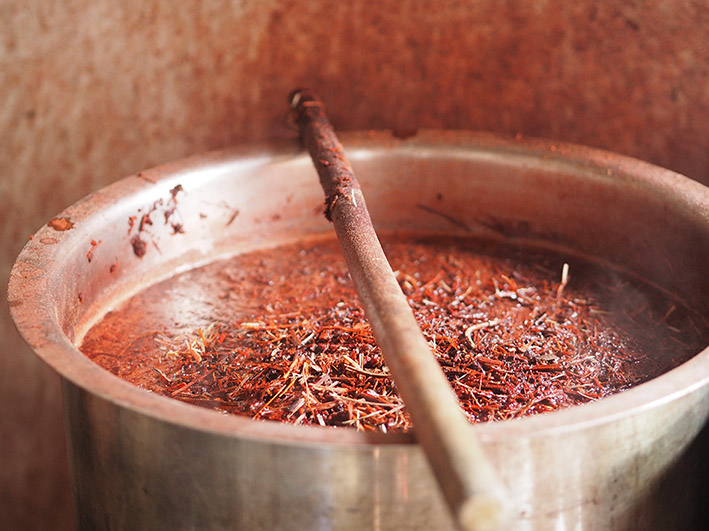
Aranya Natural Dyes Workshop in Dhaka
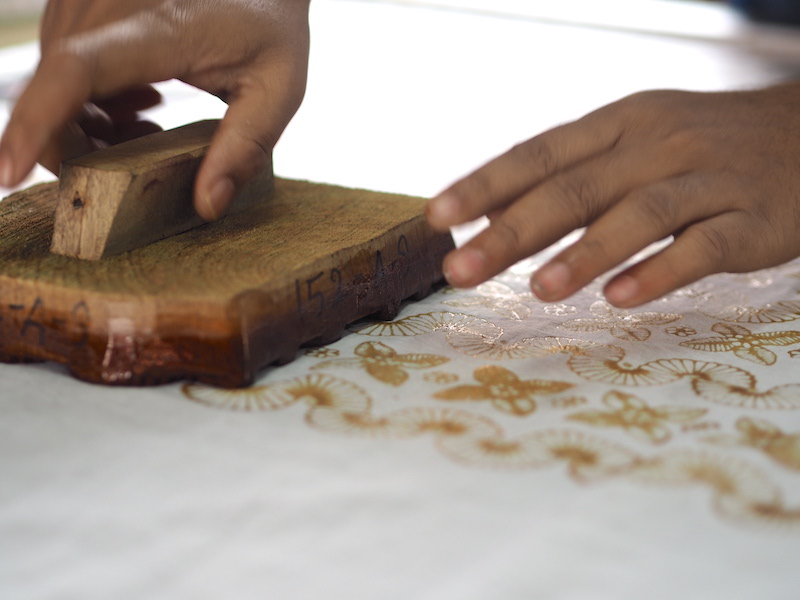
The craftsman, with the deftness of many years of experience, dips the block into a tub of hot wax, and presses the design into the fabric. Later, the fabric will be dyed, but the natural colour of the golden wax on the ivory fabric, looks beautiful even without the dye.
Written by Sonya Ahmed, 27 December 2019
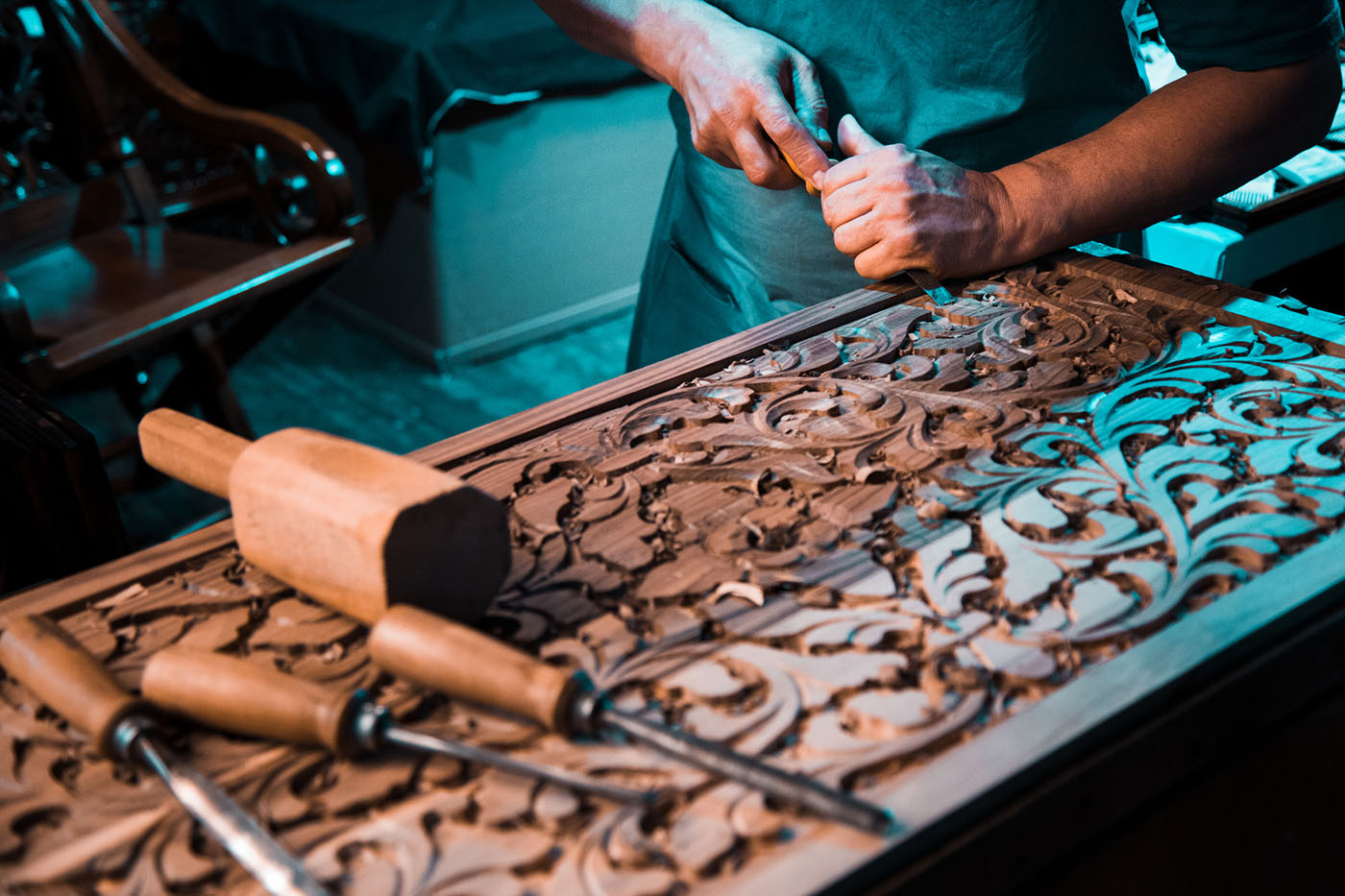
Carving blocks for printing
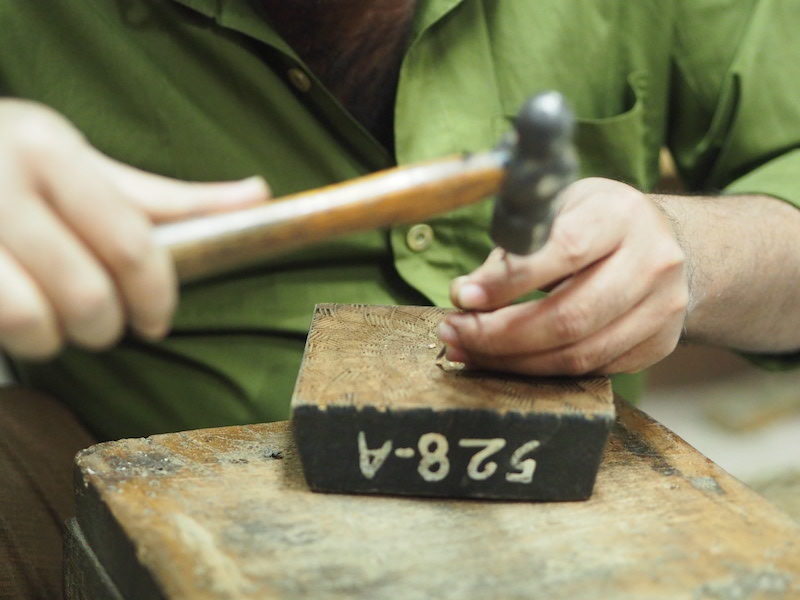
Sitting on a wooden stool, a young man focuses intently on the solid block of wood in front of him. In his left hand, he holds a metal nail at a precise angle against the wood.
Lining the walls of his small room, are shelves of similar blocks, with individual patterns carved by hand. Each block has a serial number painted on its side. The wood looks solid and weathered. There are no machine-cut, straight edges and there is no uniformity of colour. They would look at home in a museum.
But these blocks are not sitting in glass cases. They are in regular use, for the production of fabric that is sent daily to the fashion houses of Bangladesh and to Aranya’s own boutique stores in the upmarket areas of Dhanmondi and Banani.
With his right hand, he gently taps the end of the nail with a hammer. In this way, he will painstakingly etch out a delicate floral pattern to cover the entire surface of the wood.
Block Printing by Hand
The corridors are lined with bundles of un-dyed, ivory, cotton and silk fabric. In another room, workers are block-printing cotton fabric on long, trestle tables.
The craftsman, with the deftness of many years of experience, dips the block into a tub of hot wax and presses the design into the fabric. With a light thump from his fist, the design is perfectly placed.
Later, the fabric will be dyed, but the natural colour of the golden wax on the ivory fabric looks beautiful, even without the dye.
Developing natural, plant based dyes
In the early 1980s, Ms Ruby Ghuznavi set out on a personal mission to revive a disappearing craft technique. Almost a decade later, in 1990, after many years of research and development, and personal investment of funds, she founded Aranya. Starting with just siz dye colours, Ms Ghuznavi gradually expanded the range to its current 30-35 dyes.
Natural dyes are just one area of work for Aranya. Activities include block printing, wax resist dyeing, shibori and the revival of jamdani weaving and kantha stitching. Aranya is also involved in training artisans and designers in natural dye techniques, both in and outside Bangladesh.
Open Air Dyeing
A wooden door leads to an open air courtyard. Long pieces of fabric hang from a washing line – bright yellows, reds and blues, with intricate, repeat patterns. They will dry quickly in the hot sun.
On the ground, there are huge metal vats of thick, indigo dye. The colour is rich and intense. Perhaps the most well known of the natural dyes, indigo will bind to the fabric only in the absence of oxygen, so the vats must be deep.
The fabric disappears from sight as it is immersed deep into the dye. When it is pulled out and hung on the washing line, it is a murky green colour. After a few minutes on the line, as the dye comes into contact with oxygen, it turns into a familiar deep blue.
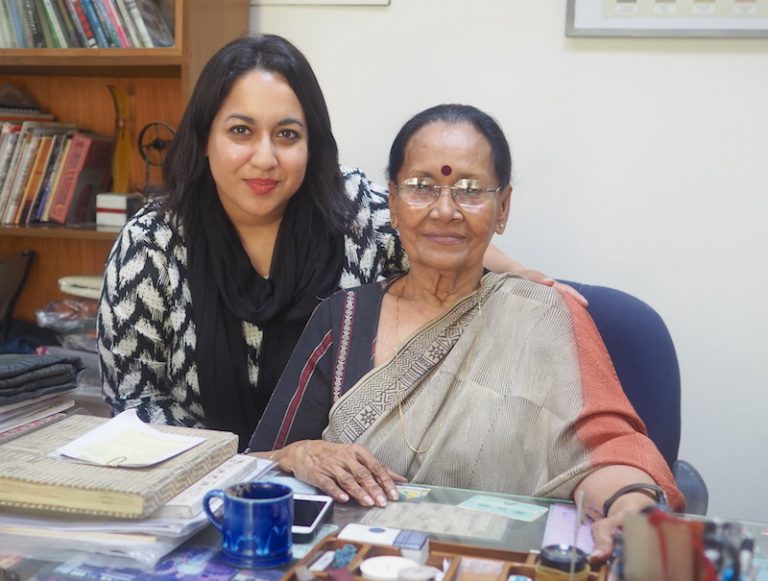
Ms Ruby Ghuznavi
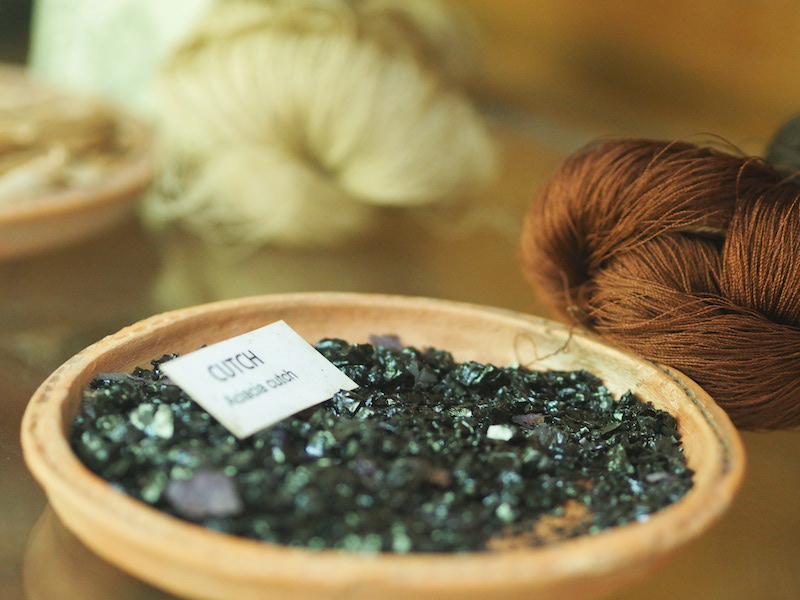
Ms Ghuznavi is in her office today, making calls. It is difficult not to stare at the unusual and rustic looking items in the room. In a wooden shelving cabinet, there is a display of dried plants and herbs used for dyeing, with balls of fibre, showing the colour produced by each plant. On her desk, there is a set of worn books, with hundreds of block print patterns, developed over several decades.
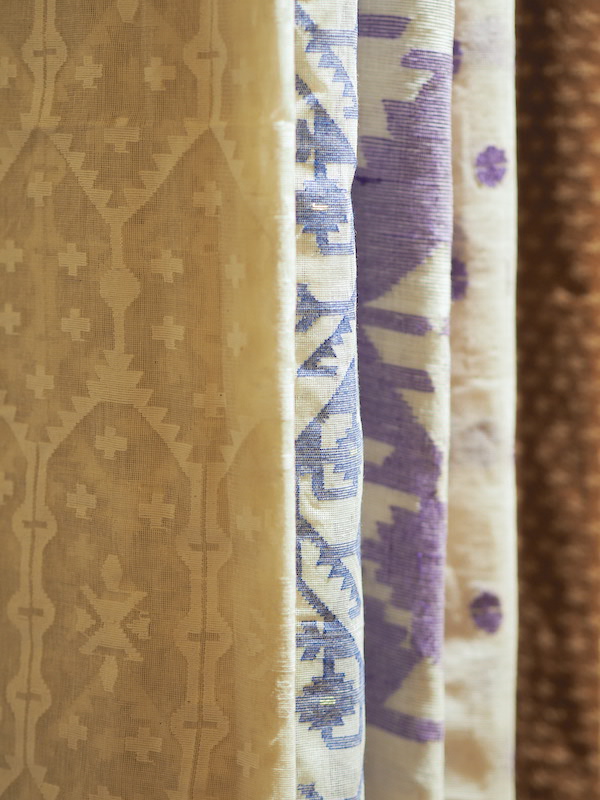
A few years ago, Ms Ghuznavi handed Aranya over to the Bengal Foundation. She continues to work at Aranya in the role of Chief Executive. Aranya has two shops in Dhaka, selling ready made clothes – kameeze, panjabi suits, scarves, saris and unstitched fabric. There is a stunning row of jamdani saris, hanging on a rail
Thank you to Ms Ruby Ghuznavi for her time and for a wonderful, behind-the-scenes visit to the Aranya workshop. Thank you also to Shimu from Handtouch Bd, for arranging the visit and explaining the processes.